

I didn’t set out to coin a new word. I was typing “ecosystem,” but my fingers had other plans — and out came “echosystem” instead. But I instantly knew it was actually right. Because the more I read about Nvidia’s explosive growth and the way analysts talk about AI, the more that typo started looking like an accurate description of the reality of the AI (yeah I’m going to call it this now) echosystem.
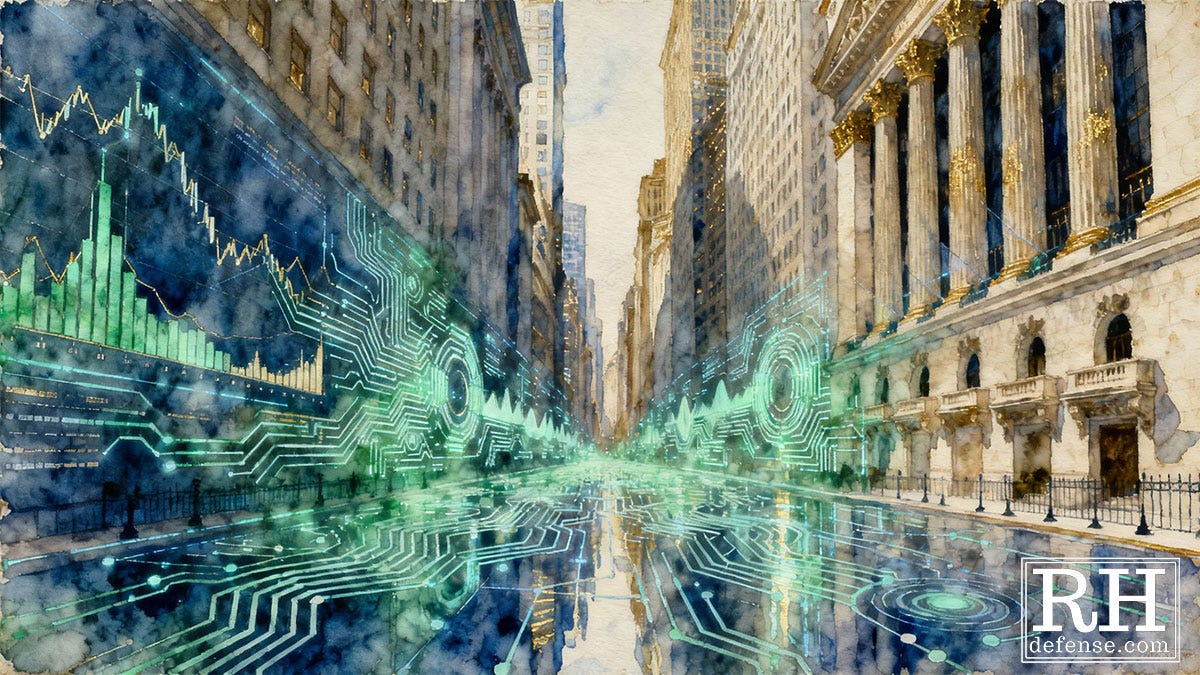
Something about the whole setup feels less like a healthy ecosystem and more like an echo chamber. As you’ll see it’s not even just a closed loop where confidence substitutes for clarity, and hype gets mistaken for proof. It’s not just AI hype sounding through Wall Street’s canyon. At least as to Nvidia, it’s also a true monetary echosystem.
For me, the pattern sounded familiar. Not from Wall Street, but from courtrooms. I’ve been practicing criminal defense long enough to know what it looks like when a system starts reinforcing its own story.
AI isn’t the first arena where assumptions bounce around long enough to harden into “truth.” The justice system has been running its own echosystem for decades. We have “experts” who validate each other, narratives that feed back on themselves, and conclusions that survive because they’re repeated.
And despite the best efforts of criminal defense lawyers like myself, the majority of them remain unexamined.
Bu as Socrates might say, “The unexamined expert is not worth having.”
Anyway, Nvidia announces earnings after the market closes tomorrow, and every financial publication in the country is gearing up like it’s Super Bowl Sunday. Maybe they’ll blow the doors off again. Maybe the numbers will scare everyone. I’ve heard some sources say that even if they do well, the reaction could likely be “ho-hum”.
Or Nvidia stock could slip or surge 7% in either direction, dragging the rest of the market with it.
But whatever happens, the part that interests me isn’t the stock price — it’s the structure underneath. The way money moves. The way confidence in AI is manufactured. The way this story sustains itself.
Because whether you’re talking about AI valuation or junk forensic testimony, the danger isn’t always fraud or malice. Sometimes the real danger is the echo. What happens to the story when it keeps bouncing through a system that’s forgotten how to ask hard questions.
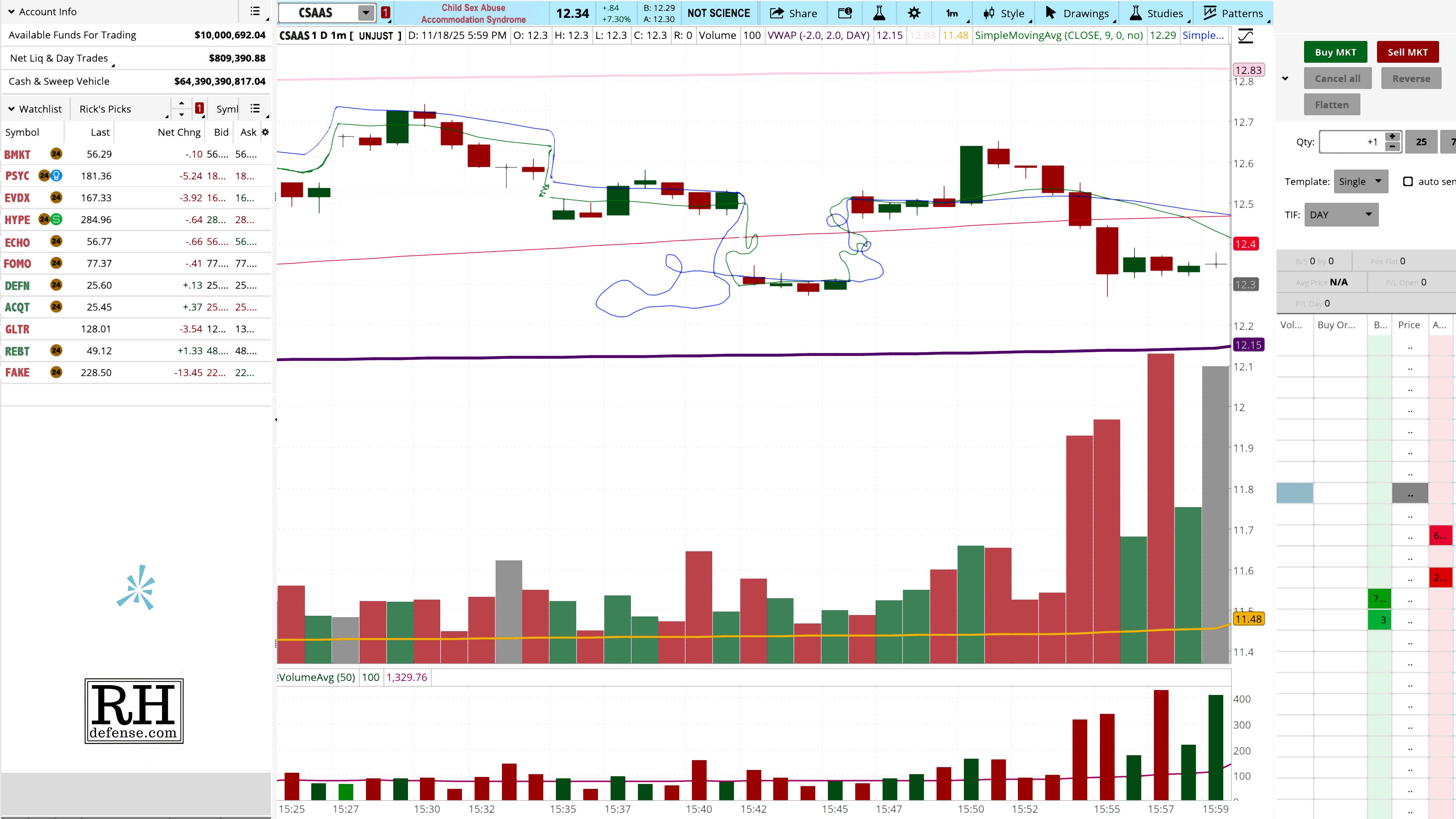
The Nvidia Loop
Take away the headlines and the breathless commentary and Nvidia’s rise isn’t hard to understand. They make the hardware (and the critical CUDA Toolkit) everyone wants, in the one sector where demand feels bottomless. But there’s a difference between real demand and manufactured inevitability, and the current AI economy blurs that line thoroughly.
What caught my attention when I was researching Nvidia (full disclosure: I did buy some for my IRA) is that Nvidia isn’t just selling hardware into an open market. They’re helping create the very demand that justifies their valuation. They’ve invested tens of billions into OpenAI. OpenAI signs a multi-hundred-billion-dollar contract with Oracle. Oracle then orders tens of billions in Nvidia GPUs to fulfill the contract. And it’s not just OpenAI and Oracle building “the Oracle”. There’s CoreWeave, Arm Holdings, Applied Digital, Recursion Pharmaceuticals, and others.
Nvidia helps fund some of these companies. The companies use that funding to purchase Nvidia’s AI-enchipped products. Nvidia reports unprecedented “organic” demand. Analysts applaud.
Jay Goldberg, one of the few analysts who doesn’t sound like he’s reading from a common script, called this “buying demand.”
He’s not wrong. This is the financial echosystem.
If you’ve lived long enough to remember Lucent’s vendor-financing schemes or Global Crossing’s round-trip revenue, the pattern is unmistakable. Money creates demand, demand inflates valuation, valuation attracts more money, and the loop gets tighter each turn.
The entire AI boom runs on a similar kind of momentum. Hype outruns capability, and capability gets reinterpreted through hype, until nobody remembers which came first: the LLM or the keg. (I know.)
But when the story gets loud enough, get repeated enough — echos about enough — people stop asking where the sound came from in the first place.
The Courtroom Echo
If this were just a story about markets, I’d leave it to the people who enjoy arguing about price targets. After all, I’m a criminal defense lawyer. I defend people accused of crimes. This is a criminal defense Substack. I write about criminal defense.
But patterns like this don’t stay confined to one domain. And here that’s especially true when it comes to the prosecution’s use of “experts” to make weak cases end in convictions.
You see, the justice system has its own version of the Nvidia loop. Its own echosystem. Its own way of turning assumptions into evidence, and evidence into truth, simply by cycling the same claims through the same small circle of people. And unlike the stock market, the consequences aren’t financial. They’re human.
CSAAS is the first place I saw this dynamic long before I ever cared about Nvidia or AI hype. Because, you see, California keeps importing the same CSAAS experts reading the same script, as though the whole state had only one source of “truth” about child behavior.
And that script is remarkably resistant to scrutiny. CSAAS was never designed as a diagnostic tool. Even its creator said as much.
The syndrome had been originally developed by Roland C. Summit, M.D. and explained in a 1983 article. Summit himself criticized the forensic use of CSAAS testimony in a subsequent article.
— Einhorn Barbarito (Law Firm), Sex Abuse Accommodation Syndrome Declared Unscientific And Inadmissible (October 31, 2018)
It was created as a therapeutic tool, not to validate criminal allegations. But in practice, it’s become a way to retrofit meaning onto whatever behavior a child exhibits.
The purpose of CSAAS “expert” testimony is to convince juries that if someone is on trial for allegedly molesting that child, the molestation did happen, and the person on trial did it.
It doesn’t matter what the child does, or doesn’t say, or what the child did, or didn’t do.
Child didn’t report the molestation for years? The CSAAS “expert” explains to the jury that this is evidence it really happened. Child reported the molestation immediately? This is totally normal, as any CSAAS “expert” can tell you. Child said it happened, and told wildly different stories about how it happened, and then retracted all their statements, and said it did not happen? CSAAS comes to the rescue.
Don’t consider any actual evidence. nor your own experience with children; just accept the opinion of the CSAAS “expert.”
— Rick Horowitz, CSAAS: Pseudoscience & Sexual Molestation: Child Sexual Abuse Accommodation Syndrome Is Built for Convictions, Not Truth (August 29, 2021)
When a theory cannot be falsified, it becomes something other than science. It becomes an echo.
California appellate courts have noticed. One case out of the Fifth District blasted the prosecution’s expert — Dr. Love — for crossing the line and telling the jury, in effect, that they must believe the children. The court also blasted the defense attorney for ineffective assistance of counsel because he didn’t object. The case was reversed for “ineffective assistance of counsel”. When an appellate court has to remind everyone that an expert cannot simply declare who is telling the truth, something is wrong with the field itself. Not with the expert. With the incentives that created the expert.
And it isn’t just a California problem. Several states have backed away from CSAAS entirely. New Jersey’s Supreme Court held in 2017 that CSAAS no longer has a reliable scientific foundation and sharply limited what experts can say, restricting it to the narrow issue of delayed disclosure.
While many states still permit some form of CSAAS testimony, a growing number recognize that the theory collapses under scientific scrutiny.
So why does California allow it? Because, as I said in my article quoted above, it helps to obtain convictions. The closest California has come to limiting CSAAS testimony is in People v. Clotfelter, 65 Cal.App.5th 30, 64 (2021). Even there, they allowed it to “rehabilitate” alleged victims if the defense tried to show they were not being truthful.
The Bite-Mark Mirage
If CSAAS is the courtroom’s psychological echosystem, bite-mark analysis is its forensic twin — a closed loop of certainty that built an entire industry on nothing more than confidence and repetition. The country dentist who became the “father” of bite-mark identification did not rise to prominence because he discovered something real. He rose because prosecutors needed what he was selling: a scientific-sounding way to turn their theory of the case into physical evidence.
And he delivered. Repeatedly. Decisively. Wrongly.
For decades, juries were told that human dentition is as unique as fingerprints, that skin records those indentations reliably, and that an expert looking at a bruise or a smudge could name the source with near-mystical precision. None of this was true.
But the “experts” agreed with each other, the courts trusted the experts, and prosecutors leaned on them so heavily that entire careers were built on bite marks that only these “experts” could supposedly see.
And each conviction became proof that the method worked.
That is how an echosystem perpetuates itself. Not through evidence, but through rumor, belief, confirmation bias.
What emotion is this information hitting you with first — anger, disbelief, dark laughter, something else? Share it below. I promise to commiserate! Or laugh darkly with you.
With bite-mark evidence, the consequences were catastrophic. Innocent people were sentenced to life in prison, some to death row, on the strength of bite-mark testimony later revealed to be pure invention. In some cases, the supposed bite marks weren’t even human. In others, they weren’t marks at all — just skin discolorations that an expert assured the jury had been left by the defendant’s teeth. And because courts trusted the expert, the interpretation hardened into fact.
The pattern is identical to what happens with CSAAS and AI bubbles. A small cluster of experts validate each other, the system accepts their mutual reinforcement as legitimacy, and the feedback loop becomes so tight that it takes years — in the legal system, sometimes decades — to unwind the damage. The system rarely asks whether the method is capable of being wrong. It just asks whether someone with a résumé is willing to say something with enough confidence.
And in bite-mark cases, that confidence put people on death row.
The scientific community eventually stepped in, not because the courts asked it to, but because the wrongful convictions piled too high to ignore. Multiple forensic panels, including the National Academy of Sciences, condemned bite-mark analysis as unsupported, unreliable, and dangerous. But by then the damage was done. Lives were ruined. Families destroyed. The legal system had spent decades amplifying the echo of one man’s certainty.
This is the part that mirrors Nvidia, CSAAS, and every other echosystem: when a system rewards confidence and punishes doubt, it will always elevate the wrong people. It takes almost no effort to create an expert loop. It takes enormous effort to break one.
And that’s where you see the pattern most clearly — how expertise fills the gaps that real evidence can’t.
In courtrooms, when a case is strong, prosecutors use witnesses. When a case is weak, they use experts.
Breaking the Echosystem’s Feedback Loop
Every system loves a story that reinforces itself. Nvidia has one. CSAAS has one. Bite-mark analysts had one for decades. Each of these stories survived not because they were true, but because enough people repeated them with enough confidence to make questioning feel like ignorance.
Echosystems don’t collapse on their own. They have to be confronted. They have to be examined. And most of all, they have to be interrupted by someone willing to say, “Hold on. Prove it.”
Tonight Nvidia will announce its numbers. The pundits will explain what it all means. In courtrooms somewhere, every court day, “experts” will testify with the same certainty.
Some echoes make money. Some echoes make convictions.
Echosystems are real.
It’s the echoes doing the damage that aren’t.
It sounds like gaslighting. Is it?