

This is the third part of a series I started a couple weeks ago on plea bargaining — and, more specifically, on why describing it as “negotiation” has always felt wrong to me.
The posts haven’t appeared back-to-back. I warned of this with the first in the series: I noted that my ADHD and other things intervening might mean interruptions. (I know myself well!) But the idea I’m working through here hasn’t gone anywhere, and it’s one I keep returning to because it keeps explaining things I see every day in court that don’t make much sense under the usual story we tell about how pleas happen.
And as I’ve recently become enamored of day trading — and I’m doing very well with it, thank you — I’ve been using market metaphors and analogies to tell the story.
In Part I, I tried to describe plea bargaining the way it actually looks from the inside: not as a conversation aimed at persuasion, but as a process more like price discovery. Outcomes don’t emerge because someone is convinced they’re fair. They emerge because pressure accumulates under unequal constraints. People test positions. They wait. They resist. They reassess. And eventually the system converges — often without anyone changing their mind about the underlying facts at all.
In Part II, I focused on time. Not time as duration, but time as cost. Delay doesn’t just stretch cases out; it redistributes pressure. Waiting is cheap for some participants and crushing for others. Pretrial detention, in particular, works — not always successfully — to accelerate everything. Yet it always turns uncertainty into punishment and usually makes resistance collapse long before truth has much of a chance to matter.
What I haven’t talked about yet — and what I want to slow down and look at here — is information. Who controls it. When it arrives. How incomplete knowledge interacts with fear and risk. And how people make decisions in a system where the cost of being wrong is unbounded, but the information needed to feel confident is always just out of reach.
This is a different kind of discovery. It’s a kind more criminal defense lawyers and others within the system recognize. It relates not to the “price discovery” previously discussed in Part I, but to the discovery of evidence and opinions about “facts” relating to the criminal case.
Because time doesn’t do its work alone. It does its work filled with unanswered questions, partial disclosures, and the stories people tell themselves while they wait. And it’s in that space — between what is known, what is suspected, and what is feared — that “choice” starts to narrow in ways that aren’t captured by the words we use later to describe it. (We’ll return to that linked article in Part IV.)
That’s the ground this part — Part III — covers.
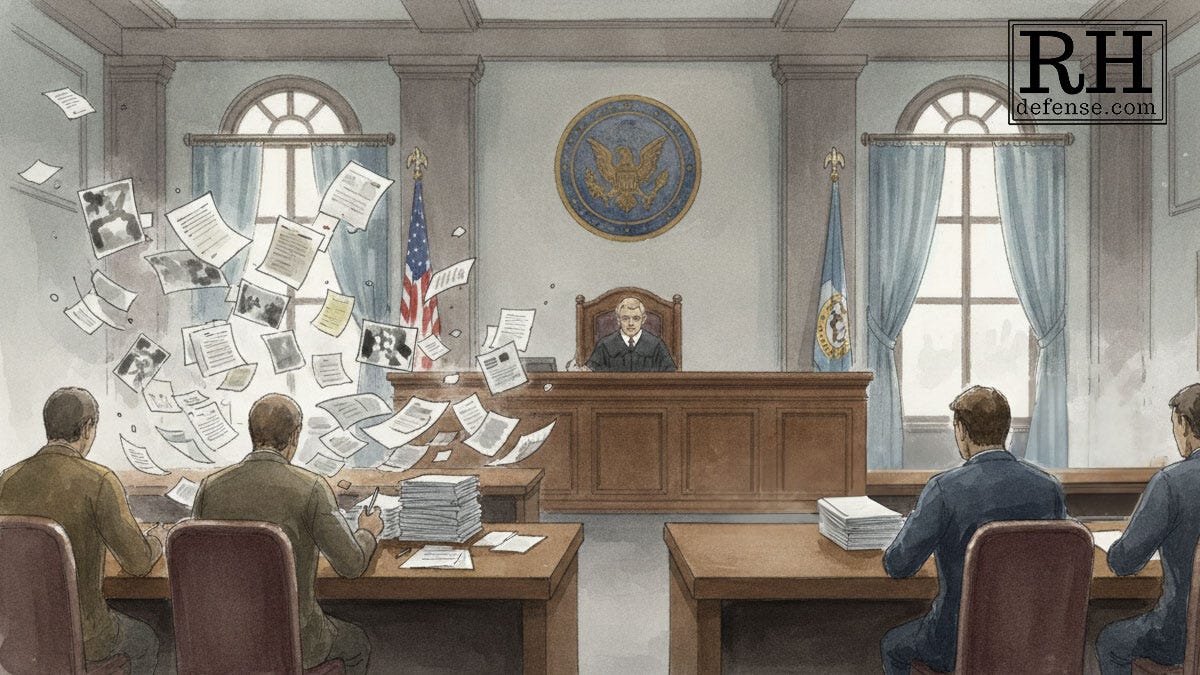
Information Does Not Arrive All at Once
One of the things that gets lost when people talk about plea bargaining is how information actually enters a case.
Not how it’s supposed to enter, but how it does.
Most people imagine that a criminal case begins with facts already in hand. The police investigate, evidence is gathered, reports are written, and then everyone sits down to decide what to do with what’s known. In that story, plea bargaining happens after the important information has been collected.
Notwithstanding alleged “open files” systems, that isn’t how it really works.
Information in criminal cases more often dribbles in. Sometimes it arrives early, but incomplete. At the arraignment, the defense might be provided with the Complaint — which provides the information about the charges the prosecution thinks it can prove — and sometimes police reports.
Other discovery arrives late, when the cost of acting on it has already grown prohibitive. Sometimes it “technically” arrives without arriving in any meaningful sense at all. My favorite is when the prosecution tells the court that “discovery has been provided to the defense” but it has actually been provided to a third-party commercial entity with which, if the defense wishes to have the discovery, the defense is required to enter into an agreement.
Not in the least bit constitutional, but the majority of criminal defense lawyers never read the agreement they’re entering into, potentially compromising their own clients, without realizing it — or maybe without caring.
I’ve refused that agreement. Consequently, it sometimes requires months of fighting in court before my client gets to see some of the evidence against him. It comes after the court finally tires of the shenanigans and orders the prosecution to do what the law already requires the prosecution to do, but which — sometimes just because it is a legal requirement — the prosecution resists.
Police reports and police body cam footage and other videos are good examples.
Police reports come early. They also come framed. They reflect what officers thought mattered at the time, what they noticed, what they didn’t, and what they believed before they ever put pen to paper. They are not neutral summaries of reality. They are artifacts of a moment — and often a rushed one — sculpted to back the prosecution story.
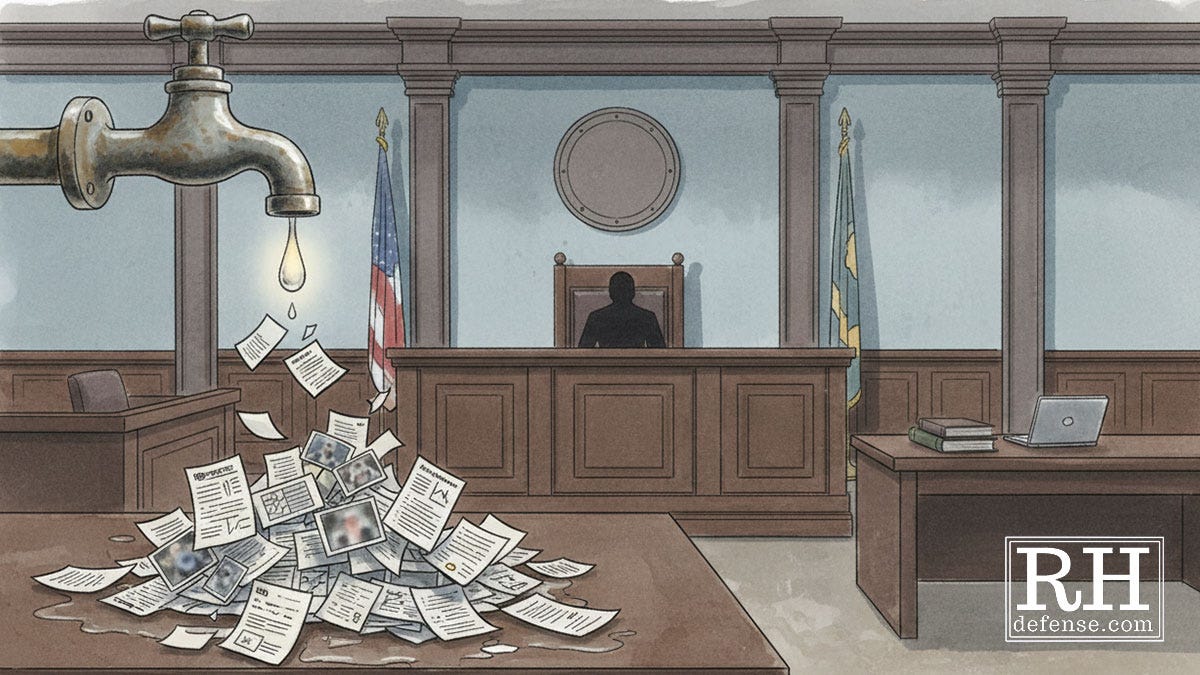
Body cam footage and other videos — Ring cameras, storefront camera,s the city’s ubiquitous surveillance cameras that track every citizen’s movement because when we aren’t on lockdown that’s just the kind of nation in which we live — can take longer to obtain. Unsurprisingly, this is because they sometimes contradict the police reports.
That’s why such discovery, when it comes, is rarely clarifying all at once. It is can be voluminous, uneven, and difficult to interpret in isolation. A body-worn camera video might answer one question while raising three others. A witness statement that looked solid on paper and is now fragile in context. Even a lab report might say less than people think it does.
And some of the most important information — technically more a part of the “price discovery” discussed in Part I of this series — about how a witness will hold up, how a jury might react, how a judge will actually rule, does not exist yet at all.
Which means that decisions are made not under conditions of knowledge, but under conditions of uncertainty.
And that uncertainty is not shared evenly.
One side controls charging decisions, enhancements, and exposure. One side controls when certain information is disclosed and in what form. The other side waits, reacts, and tries to assess risk with pieces that never quite add up to a complete picture.
This is why I try to hire a defense investigator on almost every case.
This description is not — or not purely — a moral accusation. It’s a description of how the system functions. And it matters, because when the cost of being wrong is high enough, incomplete information doesn’t just complicate decision-making — it reshapes it.
Liquidity, or Why Some Information Can’t Be Used
To return to my metaphor, in markets information by itself isn’t enough. What matters is liquidity — whether you can act on what you know without getting crushed in the process.
That turns out to matter just as much in criminal cases.
A defense lawyer can know a great deal about a case and still be unable to use that information safely. Acting on it might require filing a motion that hardens the prosecution’s position. Sometimes you want to do this; sometimes you don’t. Doing it can essentially trap the prosecution in a story that turns out not as favorable to them as they’d thought. Other times, the hardening makes makes things more difficult.
And waiting to develop it further — giving space for everyone to breathe, feelings to dampen or fade — might mean additional months of custody. Prematurely testing a theory might cause an offer to worsen or disappear altogether.
So the question is rarely just “What do we know?” It’s “What can we afford to do with what we know?”
This is where the usual reassurance — you have discovery — starts to ring hollow. Information that cannot be acted on without unacceptable risk is not stabilizing. It’s destabilizing. It increases volatility rather than reducing it. In market terms, it’s jumping into the sale on the wrong candle.
I see this constantly. A piece of discovery suggests the police report is wrong. Another suggests a witness may not hold up. But using either one requires time, motion practice, or trial — all of which carry costs that are not evenly borne.
Again, in market terms the defense is often trading in a thin market with very little liquidity. Small moves produce outsized consequences. And when liquidity is thin, rational participants don’t probe very far. They exit early, not because they’re convinced they’re wrong, but because they can’t survive the downside if they’re right too late.
Seeing the Tape Without Seeing the Book
Another reason market metaphors keep fitting for me is that criminal cases often feel like trading without Level II.
You see the last print — the current offer, the amended charge, the new enhancement. But you don’t see the depth behind it. You don’t know whether there’s real resistance at that level or whether it will vanish the moment you lean on it.
From the defense side, offers can appear and disappear without any change in the underlying facts. A case that “can’t be resolved” suddenly can. A case that looked stable suddenly isn’t. The explanation, if one is given at all, is usually vague: new information, office policy, victim input, supervisor review. (Sometimes it’s just a deputy DA wanting to get something off their plate.)
The prosecution, by contrast, usually has a much clearer sense of where the true lines are — how far it is willing to go, what it is prepared to file, and what outcomes it will not tolerate. That doesn’t mean the prosecution knows everything. It means it sees more of the book.
And that asymmetry matters, because people behave very differently when they know where the depth is and when they don’t.
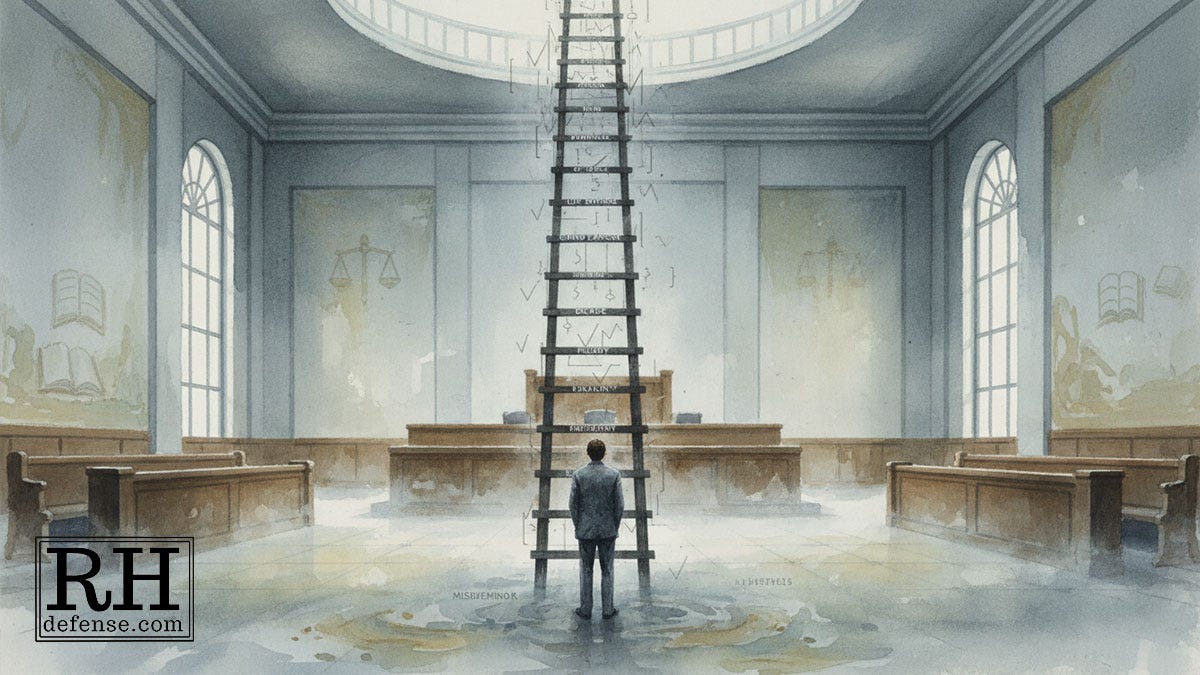
Price Ladders and the Cost of Waiting
This is also where plea bargaining starts to resemble a price ladder.
Early offers are often better. Later offers are often worse. Not always — but often enough that the direction becomes clear. The message is implicit but unmistakable: delay is expensive.
From the outside, this is defended as efficiency. From the inside, it feels more like watching the price move away from you one rung at a time.
What makes this effective is not threat, exactly, but predictability. If each attempt to wait for more information is met with greater exposure, then information itself becomes costly to seek. At some point, continuing to wait stops feeling prudent and starts feeling reckless — even when waiting is the only way to learn what actually matters.
This is one of the reasons innocence doesn’t function the way people expect it to. Being right does not improve liquidity. It does not slow the ladder. It does not cap downside risk.
It just means the trade should work — eventually.
And “eventually” is often more time than the person on the other side can afford.
What Choice Looks Like From Inside the Fog
When people later describe plea bargaining, they talk as if choices were made in the light — with facts known, risks weighed, and options freely compared. That story is comforting. It makes outcomes feel earned, and responsibility feel clear.
But from inside the process, choice doesn’t always look like that.
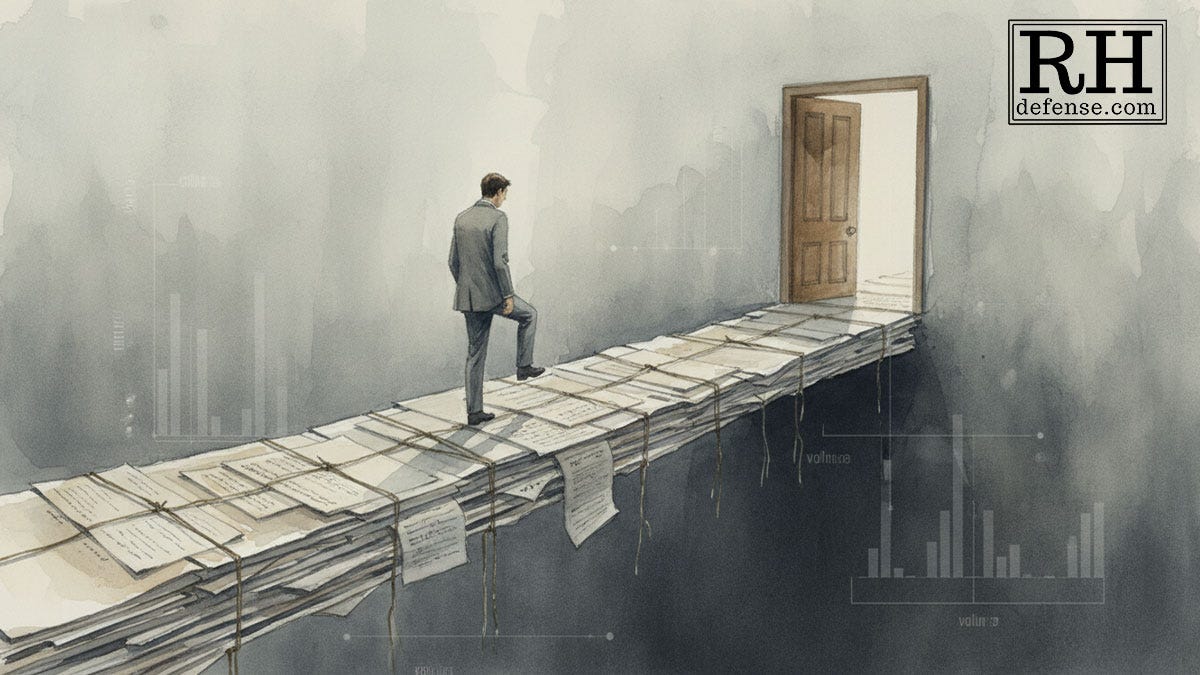
It looks like deciding whether to act on information you don’t fully trust, or waiting for information that may arrive too late to use. It looks like guessing how much pressure is real and how much is performative. It looks like trying to distinguish risk from fear when both feel identical in the body. And it looks like making irreversible decisions in a system that steadily raises the price of waiting while promising clarity just one step further down the road.
In that environment, “choice” narrows. It’s not that anyone takes it away outright, it’s because the cost of “choosing” or not grows faster than the information needed to justify the “choice”. By the time enough is known to feel confident, the downside has often become unbearable. What looks voluntary from the outside feels forced, or constrained, from the inside.
As I pointed out yesterday, that is not a moral failure. It is a structural one.
Whenever we get to Part IV, I plan to turn to how the system manages that reality — how ignorance is normalized, how fear is framed as prudence, and how finality is treated as a virtue even when accuracy remains unresolved. Because once you see how information, time, and pressure interact, it becomes much harder to believe the simple story we tell ourselves afterward about how a plea was “chosen.”
Other Parts of This Series
Part I

Part II

Part IV
