

A set of Monopoly experiments at UC Berkeley revealed something ugly about human nature: if you give someone an unearned advantage, it doesn’t take long before they start strutting, bragging, and believing they deserve their success. In the studies, players with rigged advantages rolled the dice louder, ate more of the shared snacks, and treated their “poor” opponents with open disdain. At the end, they credited their victories to skill, not luck.
Monopoly, of course, is a board game. But in California Courts, prosecutors and attorneys general hold the dice, the rules, and often the referee’s whistle — in other words, they often have the judges by the short hairs.
The privilege built into that position rewires how they see themselves and the people on the other side of the table. I see it every day. I fight it every day.
The Monopoly Effect in the DA’s Office
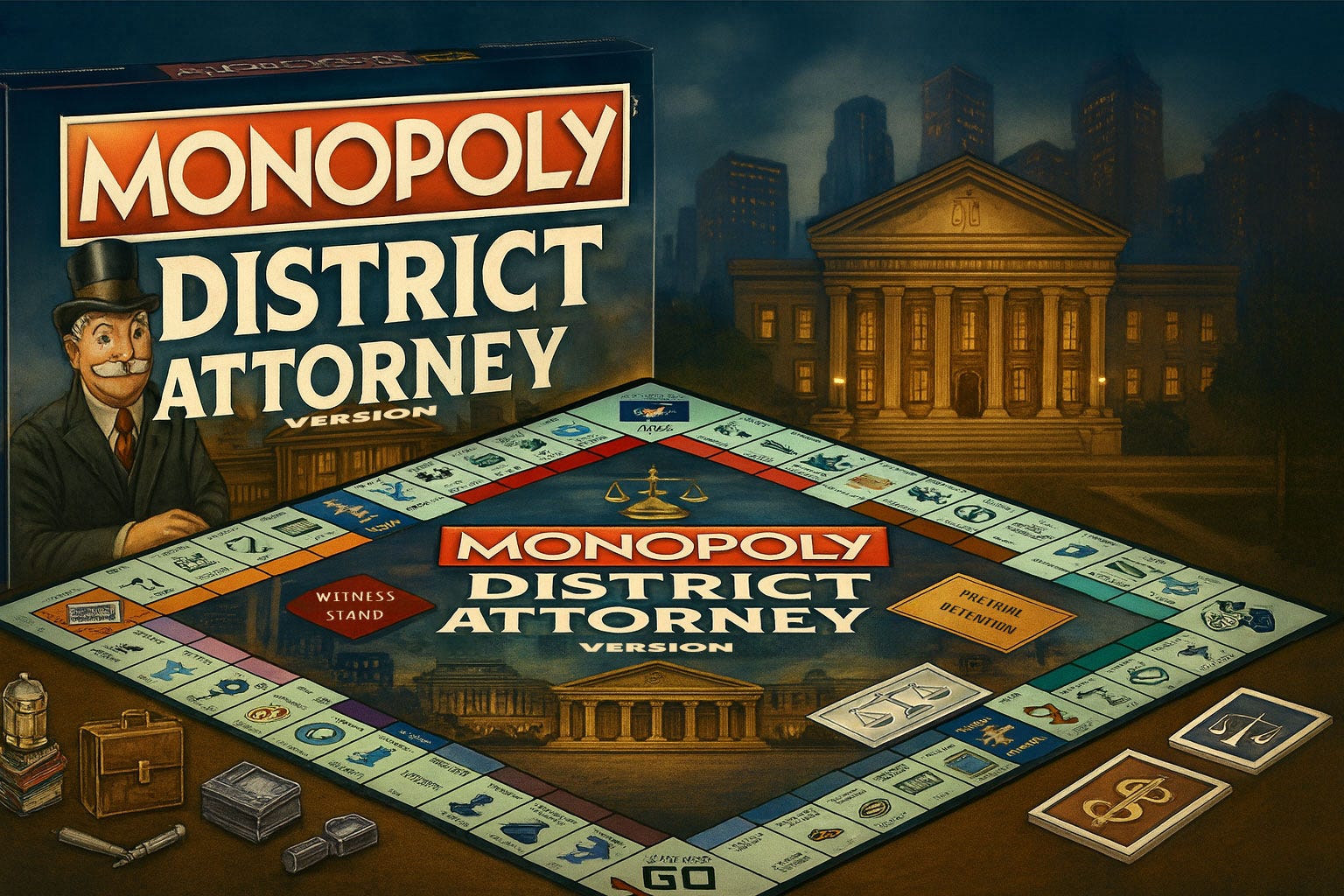
Like Monopoly’s “rich players,” prosecutors mistake advantage for brilliance. Wins are chalked up to the DA’s supposed talent, not the system.
Nowhere is this more true than in cases involving DUIs — especially DUIs where a death is involved — or those “nasty” sexual molestation cases involving children.
Although in those cases, the conviction frequently comes from the mere allegation — with defense attorneys like me fighting an uphill battle, forced to overcome the unconstitutional hurdle of “proving” our clients are innocent — prosecutors who handle those cases are the most likely to believe they are born geniuses and masterful gifts from G-d to the work of putting away “criminals.”
But the truth is simpler:
They decide the charges — including enhancements that multiply exposure. (And those charges are not aimed at achieving justice, but achieving leverage.)
They dictate evidence flow — manipulating deadlines to their advantage.
They lean on Proposition 115 (1990), which lets police officers testify to hearsay at preliminary hearings. In Whitman v. Superior Court (1991), the California Supreme Court upheld that scheme, effectively reducing prelims to rubber stamps.
Some legal scholars have described prosecutors as “czars” because of this discretion. They’re not exaggerating. In practice, prosecutors wield more unchecked power than anyone else in the courtroom. And the longer they operate in that bubble, the more convinced they become that their outcomes reflect skill, when in reality, they’re the result of privilege.
“American prosecutors, by and large, see themselves as czars.” — William J. Stuntz, The Pathological Politics of Criminal Law, 100 Mich. L. Rev. 505, 581 (2001)
The Stampede Effect: When Culture Takes Over
Philip Feldman’s 2023 Stampede Theory: Human Nature, Technology, and Runaway Social Realities explains what I’ve seen in entire DA’s offices: once individuals steeped in privilege gather together, their biases reinforce one another. The herd moves as one.

That’s why line prosecutors treat conviction rates as determining the scorecard. It’s why overcharging becomes the norm. And why even weak cases get pushed forward as if public safety demanded it.
The group dynamic — DA Culture — blinds them.
It isn’t just one puffed-up Monopoly winner. It’s a stampede of them — convinced they’re protecting the public, when in reality they’re protecting their own momentum.
Entitlement’s Backlash When Checked
Kristin J. Anderson describes entitlement’s response to challenge as being “enraged, rattled, and wronged.” Kristin J. Anderson, Enraged, Rattled, and Wronged: Entitlement’s Response to Social Progress 167–94 (Oxford Univ. Press 2021). That’s exactly how prosecutors react when the system pushes back.
A judge suppresses tainted evidence? It’s not that the judge is making a correction based on law: the judge has derailed the prosecution’s case.
A jury acquits? Prosecutors (and some judges) blame “dumb jurors,” not weak evidence.
The Legislature passes SB 81 (2021) to curb excessive enhancements? Prosecutors fight dismissal motions as if their personal authority were under attack.
The same entitlement that blinds them in Monopoly blinds them here: they expect to win, and when they don’t, they treat it as injustice. It’s not the system working as it should…unless they win.
California’s Rigged Rules of Play
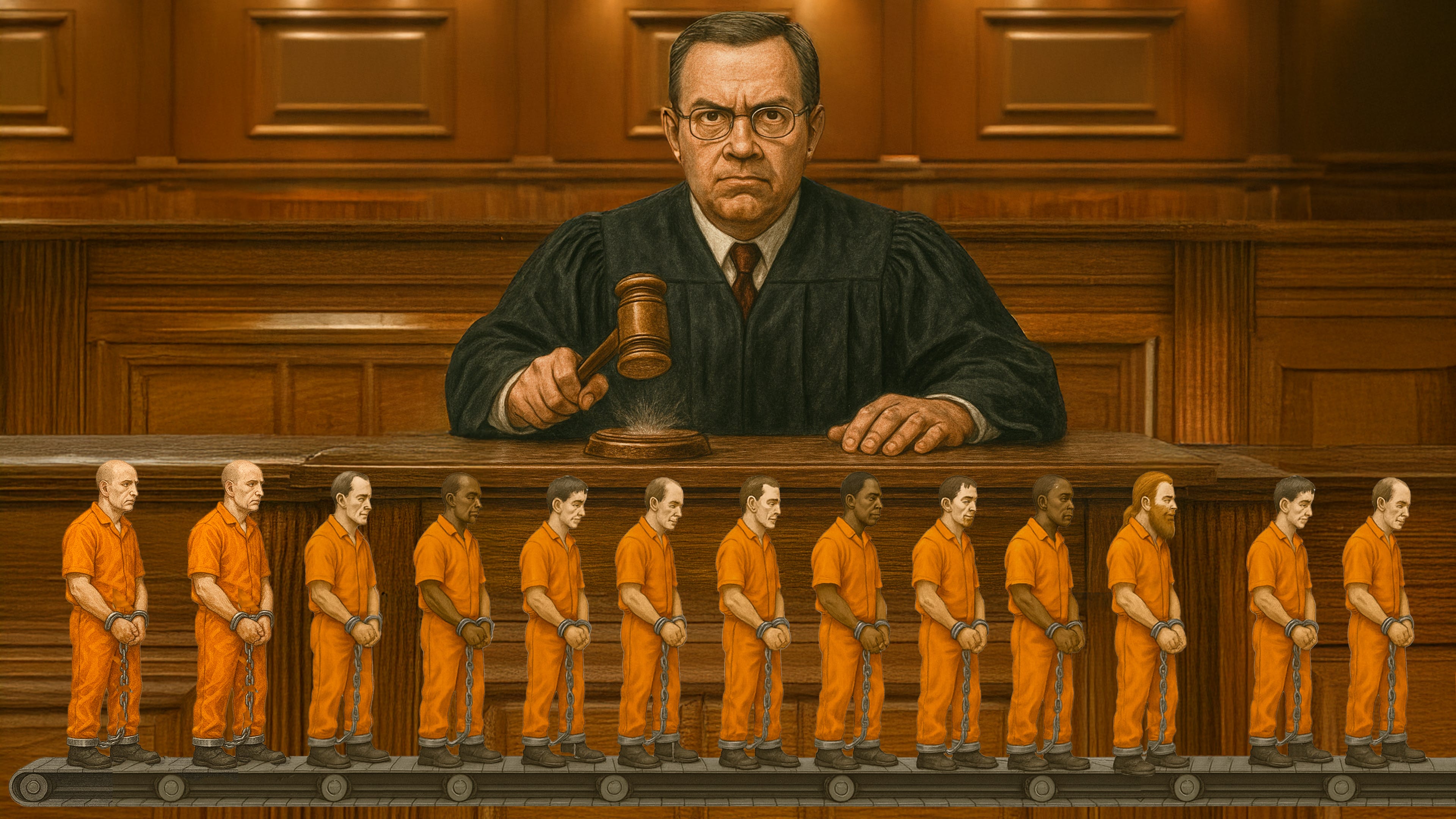
Federal prosecutors at least go through the motions of a grand jury. In California, after almost 20 years of practice, I’ve never had a case start that way. Prosecutors don’t need it. They file a complaint, and the machine fires up; the conveyor belt gets going.
Prelims: Prop 115 and Whitman let hearsay carry the day. Rubber stamp.
Bail: In re Humphrey (2021) requires courts to consider ability to pay and alternatives, but prosecutors still demand high bail as the default. Rubber stamp.
Strikes and Enhancements: California’s Three Strikes law (Pen. Code §§ 667(b)–(i), 1170.12) arms prosecutors with massive leverage. Even though People v. Superior Court (Romero) (1996) gave judges discretion to strike priors, DAs resist almost every Romero motion. Slightly less rubber stamping here, but…
This isn’t a neutral playing field. It’s Monopoly with weighted dice and house rules written by the DA’s office.
Every square on the board leads back to the same place: the prosecutor holding the rulebook, deciding which players get to keep rolling.
What Defense Lawyers See
From the defense table, the trifecta is plain:
Monopoly Effect: arrogance dressed up as “skill.”
Stampede Effect: groupthink that makes the culture harsher than any single prosecutor might be.
Entitlement Backlash: outrage whenever someone resists.
For my clients, this means inflated charges, bail they can’t pay, and “deals” that feel more like ultimatums. For me, it means watching prosecutors act like referees of justice when they’re really players with every advantage stacked in their favor.
Moving Forward
The Monopoly studies show how privilege rewires individuals. Feldman’s Stampede Theory shows how those individuals, gathered in herds, become blind to fairness. Anderson shows how entitlement reacts when challenged: with rage and resistance.
Add them together, and you have the California courtroom. Not neutral. Not balanced. Rigged. Until we confront how prosecutorial privilege distorts both people and institutions, justice in this state will keep looking less like fairness — and more like a rigged game.
Well thought out and easy to understand. I'm not familiar with the criminal law (I practice civil litigation) and am constantly amazed at what defense lawyers have to go through to defend their clients.
Another great read. Thank you Mr. Horowitz!