

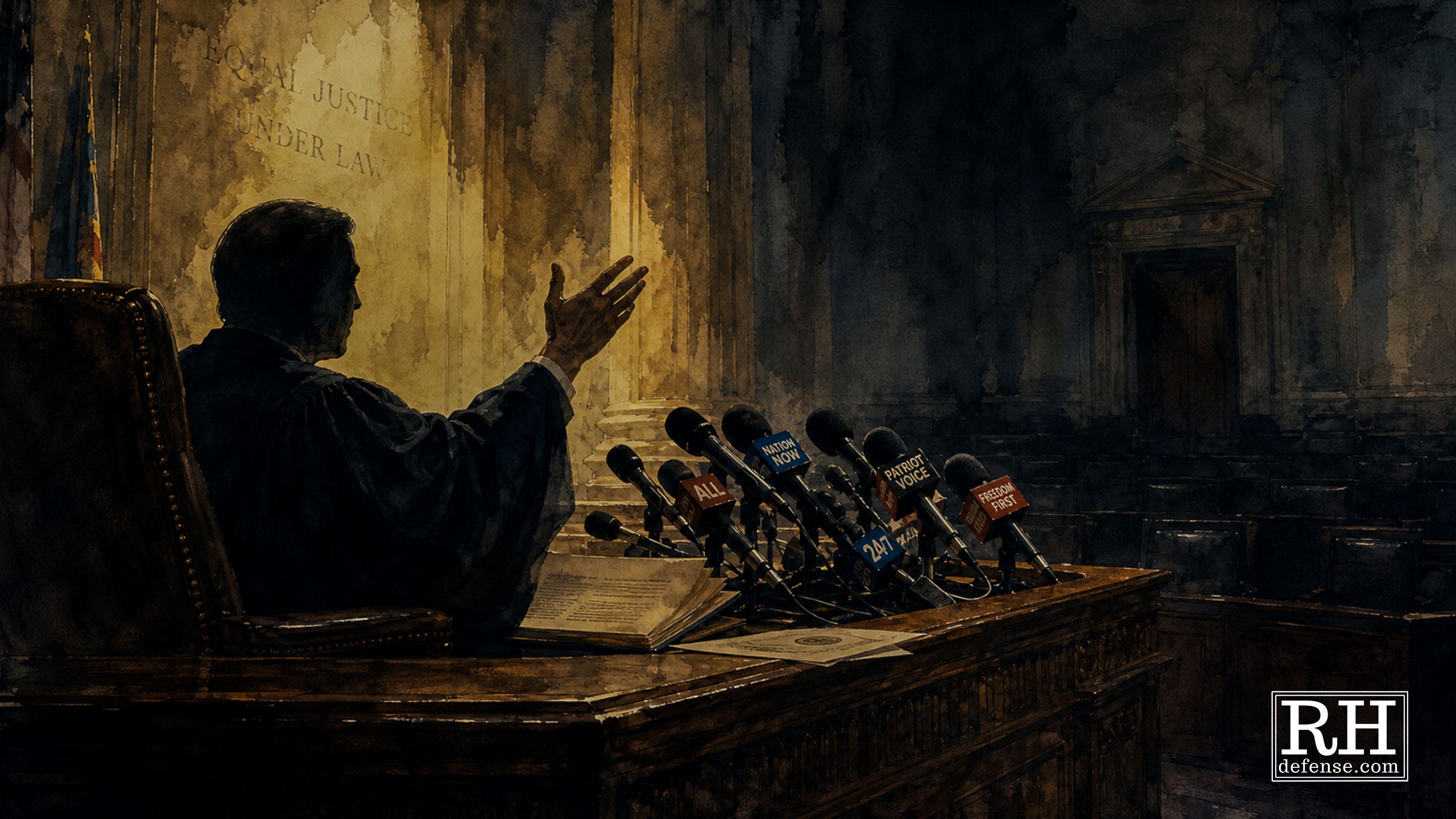
On April 30, 2026, the California Supreme Court decided In re Kowalczyk. I already wrote about this in Kowalczyk and the End of Pretend Bail Seven justices, zero dissents, one foreclosed workaround. In my previous article, I mentioned the “next front” or battlefield that I expect to come from this.
The more I’ve thought about what happened, the more irritated it makes me. Because there was a concurrence that — for those who want the tl;dr version — is 100% dicta and 100% political advertisement.
In In re Kowalczyk, Chief Justice Guerrero, writing for a unanimous court, resolved a constitutional ambiguity that In re Humphrey had left on the table in 2021: the relationship between Article I, section 12 guaranteeing release on bail subject to specifically enumerated exceptions and Article I, section 28(f)(3), the “Public Safety Bail” provision added by Proposition 9.
The Court held that section 12 controls and that section 28(f)(3) plays within its monkeybars rather than building a new playground. Applied to Mr. Kowalczyk, a homeless man held in pretrial custody on a $75,000 bail he could not pay after attempting to use found credit cards to buy a $7 cheeseburger, the holding meant the trial court had erred. Liberty is the norm. Detention is the carefully limited exception. That is a holding. It is binding.
Justice Wiley joined that holding without reservation. He then wrote separately to do something else.
What a Concurrence is Supposed to Do
A concurrence has a small repertoire. It can supply an alternative legal ground for the result. It can sharpen or qualify the majority’s reasoning. It can flag a doctrinal question reserved for a future case. It can register a narrow disagreement that doesn’t disturb the disposition. These are the moves. They share a common feature: they are still doing legal work, still tied to the case in front of the court.
What a concurrence does not do — what it has no business doing — is launch into freestanding policy commentary on a contested social question while joining the majority’s reasoning in full. The grammar of the form rules it out. If a justice has joined the majority opinion, by definition nothing in the separate writing is necessary to the decision. It supplies no rule. It binds no court. It is dicta, and, here, not the productive kind that clarifies law for the next litigant. It is dicta unmoored from the act of judging.
The Unnecessary Invitation
Justice Wiley’s concurrence, brief as it is, reads as a sustained policy meditation. He asks what an ideal bail system would look like. He wonders whether there are models California should emulate from other jurisdictions or from federal practice. He concedes — explicitly — that the judiciary, unlike the political branches, cannot freely investigate, consult, compromise, or face the voters on policy platforms. He says the political branches have “tremendous advantages over the judiciary” in designing pretrial release regimes. And he closes with the line that gives this piece its title: “I hope the invitation is accepted.”
That is not a holding. It is not even reasoning. It is a wish — addressed to the Legislature and the Governor — published in a volume of the California Reports.
Read the text carefully and notice what it does not contain. Justice Wiley does not articulate a different legal framework for the section 12/section 28(f)(3) question. He does not narrow or qualify the majority’s reasoning. He does not stake out a separate ground for the result. He does not even register a concern about the holding he joined. He has used the institutional vehicle of a California Supreme Court concurrence to encourage two coequal branches to take up a policy direction he seemingly prefers — that’s the best reason I can figure for why he bothered to write this.
Whatever the merits of pretrial-release reform — and to quote someone else who is always dicking around where he needn’t, “many people” believe there are serious ones — that is not the assignment.
Why This is Unbecoming
Judges hold their authority on a narrow franchise. They decide cases. The reason judicial opinions carry weight is the same reason they’re constrained: judges speak when a live controversy comes before them, and only so far as their words are necessary to resolve it. Strip that constraint and a judicial opinion becomes a newspaper column or a Substack post with a gavel attached.
There is a sharper version of the point in this case. Justice Wiley sits on the Court of Appeal, Second District. He occupies a seat on the Supreme Court only by temporary assignment, filling the vacancy left by Justice Jenkins’s retirement. He is a guest at the high court’s bench. The borrowed pulpit makes the political tone even worse. A justice on a temporary commission has, if anything, more reason to keep the work close to the case and the case alone.
The dicta-as-political-advertisement form has a particular pathology. It allows the writer to disclaim any operational effect — it’s just a concurrence, it binds nothing — while collecting the rhetorical premium of the institutional letterhead. It is arbitrage. Lobbyists use op-eds; this judge used a concurrence.
The political-advertisement reading I’m arguing here isn’t me promoting some controversial view. CalMatters, covering the decision for a general audience, described the concurrence in plain English as having “essentially begged for the matter to be resolved by the governor or the Legislature.” That is a journalist, not a defense lawyer, calling a concurrence what it is: supplication.
A judge who wants to address the political branches on policy has every legitimate venue available to him. A law review article. A speech. A commission. What he may not do — what he should not do — is fold the policy preference into the California Reports and pretend it is judicial work.
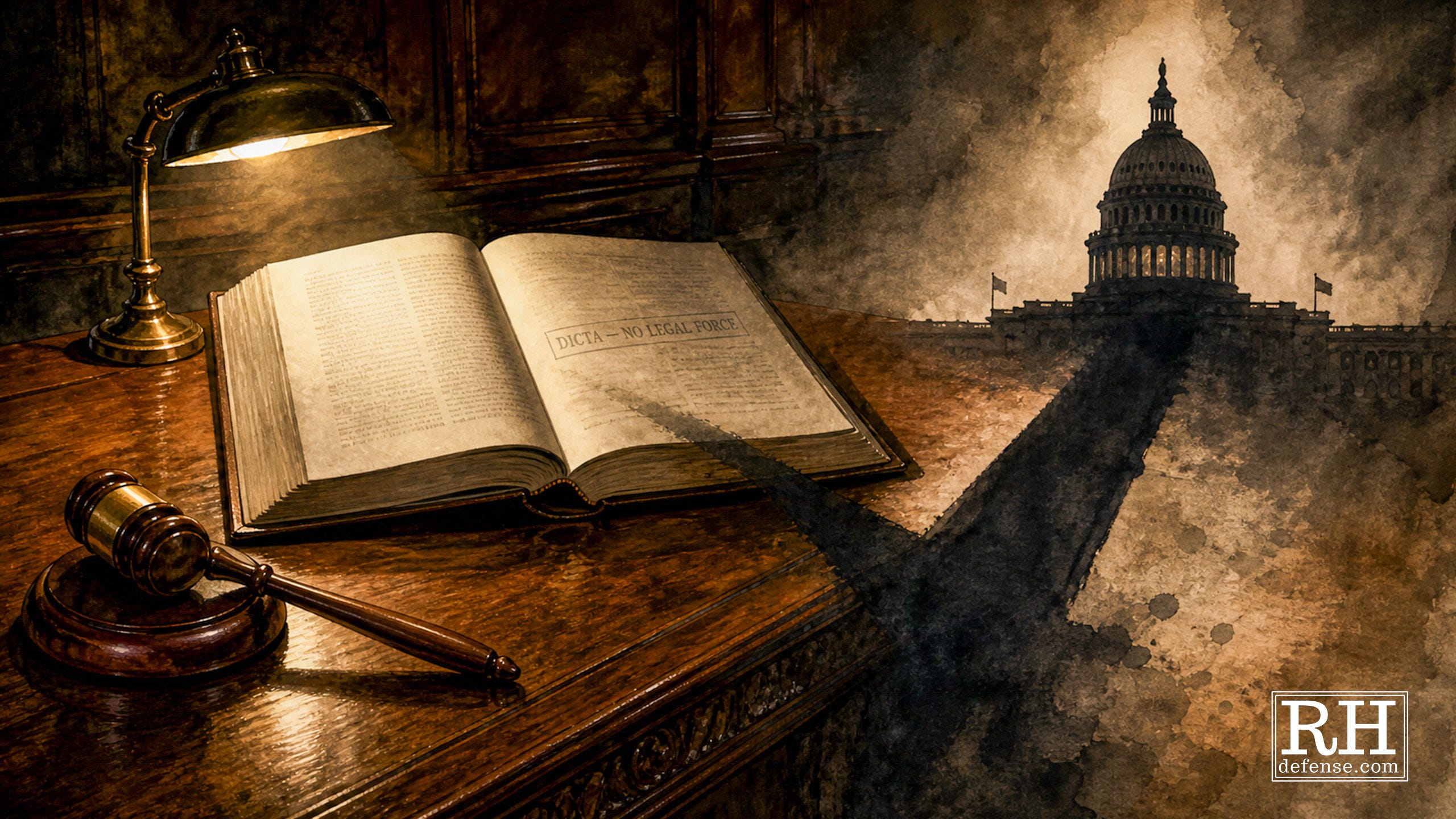
Legal Force vs. the Operational Danger
The dicta has no legal force. But legal force and operational force are not the same thing. Lawmakers and prosecutors who have spent the better part of a decade agitating for an aggressive reading of section 28(f)(3) — for a return to the unaffordable-bail status quo under a public-safety theory that serves only to add further pressure for detained people to plead out so they can go home — now have a sitting California Supreme Court “justice” telling them, on the record, “The door is open”. They will cite Justice Wiley not as authority (he supplied none) but as cover. Even the justice who joined the holding hopes you’ll act.
That cover is the damage. Kowalczyk will be quoted in legislative testimony for years. So will “Wiley’s Wish”. The first will do legal work. The second will do political work. Both will travel under the same imprimatur.
Coda
The Chief Justice did the work. She resolved a constitutional ambiguity that had been pending since Humphrey sidestepped it five years ago. The holding is careful, the reasoning patient, and the result faithful to a state constitutional right that has been part of California law since 1849. Whatever one thinks of pretrial-detention policy, that is what a judicial opinion looks like.
The concurrence is something else. It is a flat-out political advertisement. There is no law, nor subtlety, at all.
The California Reports are not the right venue for such chicanery.
Nobody pays me to call out judicial sleight-of-hand when dicta starts doing political work. If you value analysis that separates legal authority from institutional theater, support it here.
Chicanery or not, it was bound to be said by many judges. Saying it ain’t getting it. Remember SB 10? The Legislature ain’t buying what Wiley is selling.