

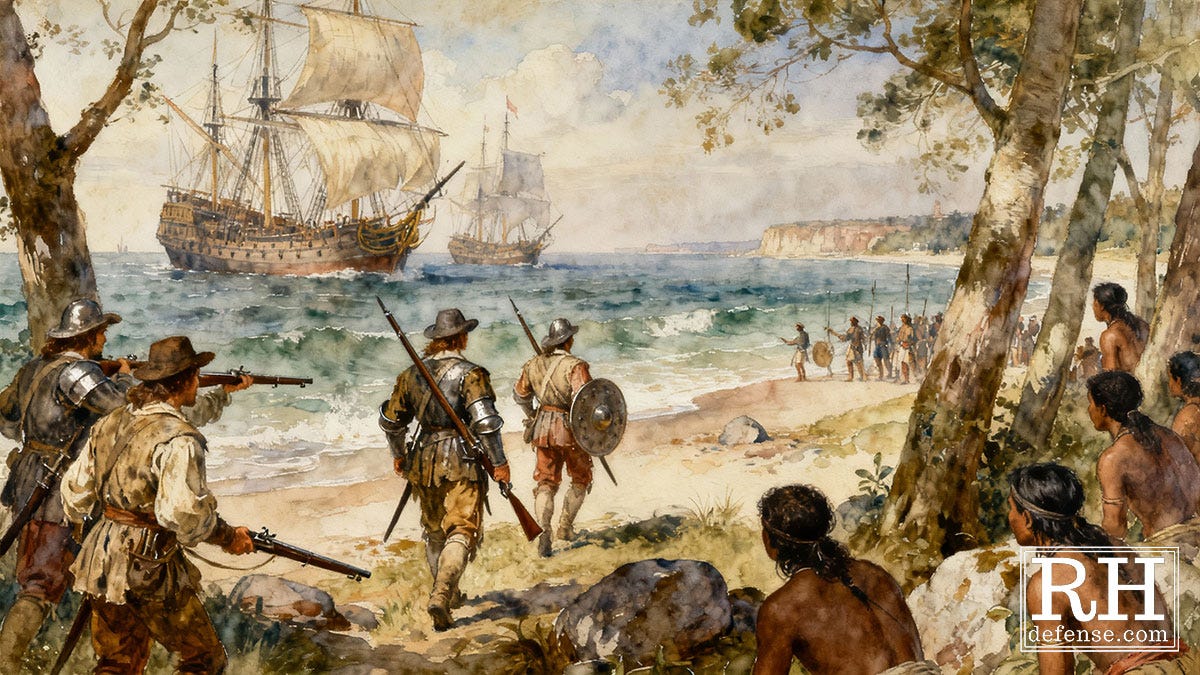
Every November, Americans set a table and rehearse a story of gratitude and generosity. We celebrate a group of Europeans who arrived on a strange shore, out of necessity — hungry, uncertain, dependent on the kindness of those already here. We call them “Pilgrims.” We call the celebration Thanksgiving.
But here’s the ugly truth often hidden by that story: those first arrivals were, by any modern legal standard, undocumented. No visas. No permission slips. No green cards. No government sponsorship. And the people who extended hospitality to them — the Indigenous inhabitants — are the ones most often erased from the myth just as we tried to erase them from the continent.
That irony is one thing. What’s far darker is that today, in 2025, a powerful federal agency is enforcing immigration laws not just on undocumented immigrants — but often on U.S. citizens: sometimes mistakenly, oftentimes violently, and always without justification.
Some of those people look like the infamous “other.” Some look like you or me.
When Immigration Enforcement Targets Citizens
According to a recent investigation by ProPublica, in just the first nine months of this administration’s second term agents have detained over 170 U.S. citizens during immigration raids. That tally includes nearly 20 children — some with serious illness — and families torn apart for weeks.
It’s personal.
In Alabama, a U.S.–born construction worker named Leonardo Garcia Venegas was arrested — not once, but twice — then released after filing suit, claiming his detention violated his Fourth Amendment rights.
In Oregon, a 17-year-old high-school senior was pulled over by immigration agents while driving to lunch, had his car window smashed, and was detained — even after repeatedly saying he was a citizen.
In Los Angeles, U.S. citizens recount being handcuffed, jailed, accused of crimes they didn’t commit, simply because they were inside a neighborhood dragnet.
And let’s be clear — this isn’t just about bureaucratic error. These are sometimes violent, humiliating sweeps. Agents have tackled people, restrained them with knees on their necks, held them handcuffed outside in the cold, even when pregnant or elderly.
There is none of the compassion the Wampanoag people showed to the first invading wave of undocumented immigrants.
The people doing the detaining often justify it with fear-mongering — “We don’t target citizens.” But the stories tell a different truth.
The Hypocrisy Is Historical — and Still Very Present
When the “Pilgrims” landed, there was no immigration enforcement bureaucracy. No deportations. No ICE. The land was home to Indigenous nations. And yet, we celebrate those arrivals as the founding of a nation whose identity would soon be built on borders, exclusion, and a legal regime of permission — permission others must constantly prove to stay.
Today that permission — paper, status, legality — remains a weapon. Earning rights through legality, then wielding legality to exclude entire populations. And increasingly — occasionally randomly — to round up citizens too.
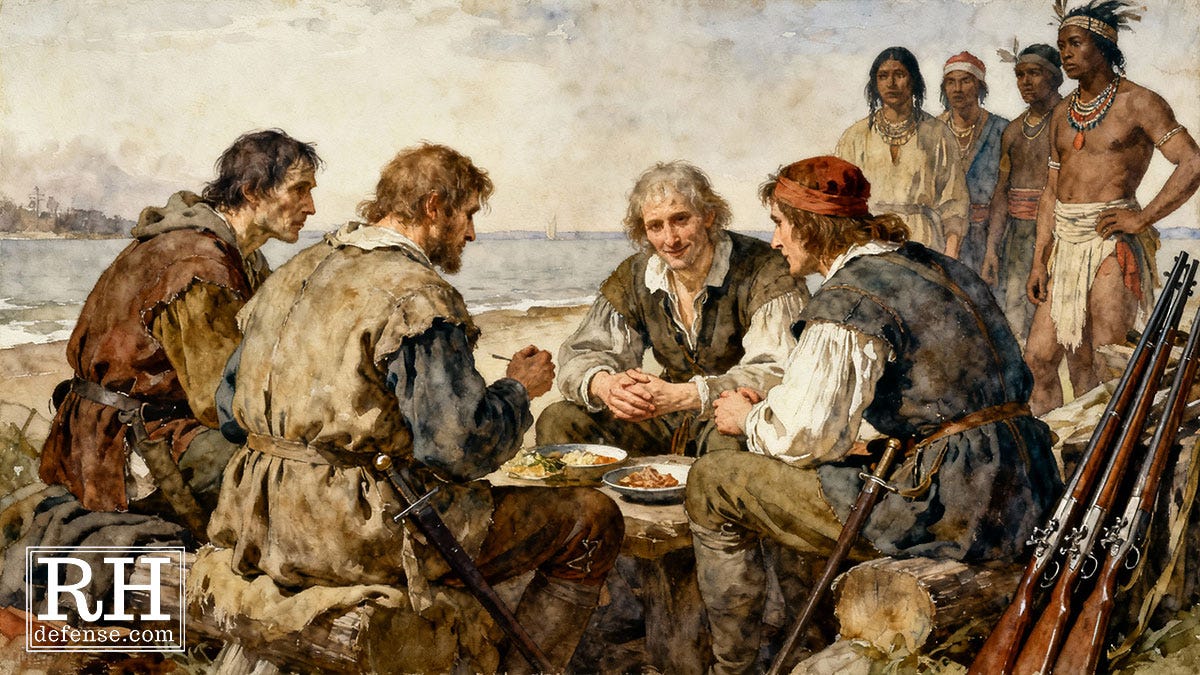
The first undocumented immigrants eventually became the founding myth. The founding myth was founded on destruction and the founding of the holiday thus fittingly was itself founded upon continuing destruction.
The formation of Thanksgiving as an official, United States’ holiday, did not begin until November 1863 during the Civil War. President Abraham Lincoln officially established the holiday as a way to improve relations between northern and southern states as well as the U.S. and tribal nations. Just a year prior, a mass execution took place of Dakota tribal members. Corrupt federal agents kept the Dakota-Sioux from receiving food and provisions. Finally at the brink of death from starvation, members of the tribe fought back, resulting in the Dakota War of 1862. In the end, President Lincoln ordered 38 Dakota men to die from hanging, and he felt that Thanksgiving offered an opportunity to bridge the hard feelings amongst Natives and the federal government.
— Citizen Potawatomi, The True, Dark History of Thanksgiving (November 25, 2020)
The latest wave of enforcement shows how myth still defines who belongs, who are citizens and people with paperwork the government approves of — who gets a seat at the table — and who gets dragged off it at gunpoint.
This Hits All of Us — Not Just Immigrants
When enforcement becomes unchecked, when suspicion becomes enough for detention, we’re all vulnerable.
Workers lose trust in the communities and systems we rely on. Families — citizens and people with paperwork the government approves of, or not — live in fear. Schools close. Churches empty. Businesses shutter. Lives stop. The social fabric frays.
And when even citizens get snared, it proves something elemental: the thuggery isn’t just directed at the “other.” It’s broad. Blunt. Indiscriminate.
That should bother anyone who calls themselves American.
Not Just Mourning — Resistance, Solidarity, Hope
But I don’t want this to be a dirge. (Really.) I want this to be a call.
Communities across the country are fighting back. Advocates, lawyers, organizers — standing at courthouses, bus stops, workplaces — shouting “Know your rights,” offering pro bono representation, documenting abuses, pushing courts to rein in unconstitutional tactics.
Local businesses — right here in Fresno and around the country — are refusing to cooperate. Neighborhood watch groups are mobilizing. People are reclaiming public space from fear.
What’s needed is more than sympathy. It’s solidarity. Legal challenges. Public pressure. Political accountability.
What This Holiday (and Every Day) Should Make Us Ask — and Change
On a day meant to celebrate gratitude, we should ask — gratitude for what? For arrival? For ownership? For exclusion? For a federal government that turns on non-citizens, citizens, state, and local governments, alike? For a government that has decided anyone who dissents from federal overreach should be targeted? Even going after members of Congress? Ignoring courts? A Supreme Court that endorses racial profiling?
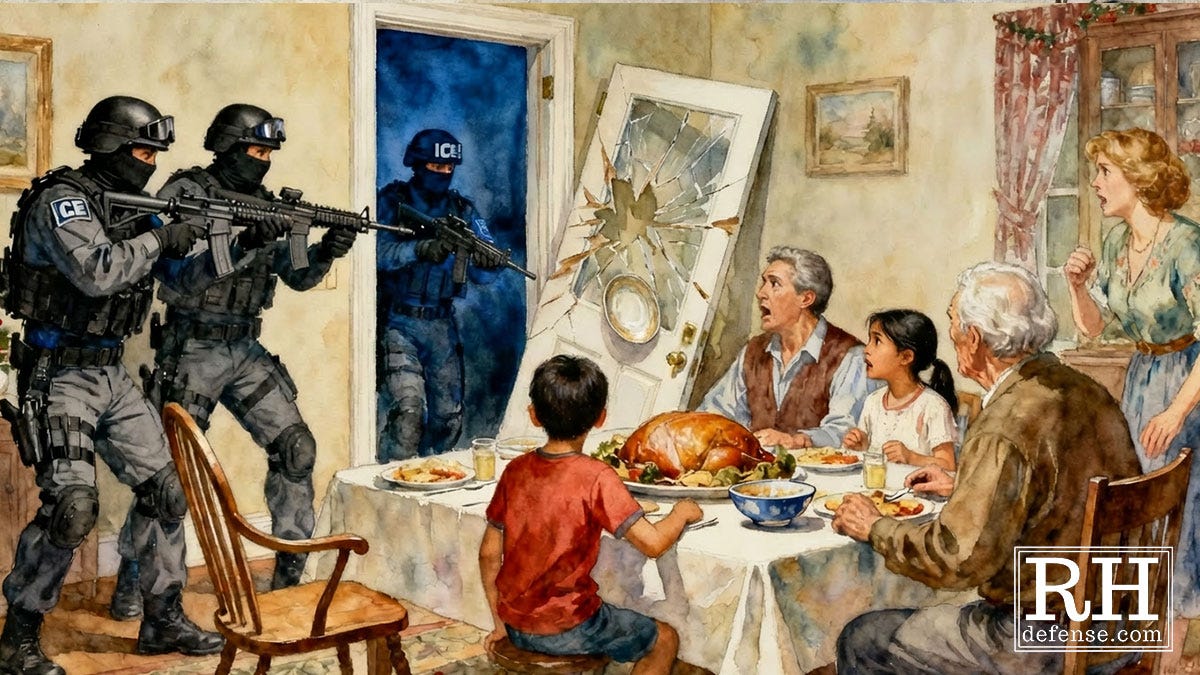
If we truly value justice — if the law is supposed to protect, not terrorize — hell, if the law is even supposed to mean anything — then we should demand a second kind of legacy. One where belonging doesn’t come with status. Where humanity doesn’t wait for permission. Where the first undocumented immigrants are honored not as “founders,” but as a warning — that the machinery built on their backs can turn on any of us.
Because the only thing more dangerous than an undocumented immigrant is a system that can treat a citizen like one without repercussions.
So this Thanksgiving — or any time you sit down at a table — spare a thought not just for who wasn’t welcomed, but for everyone who’s being hunted.
Let’s not celebrate a myth. Let’s contest the system.
Food for thought, right?!